 Work
Work
 Work
Work
 Rite Aid
Empowered users to create one cart with prescription and non-prescription items.
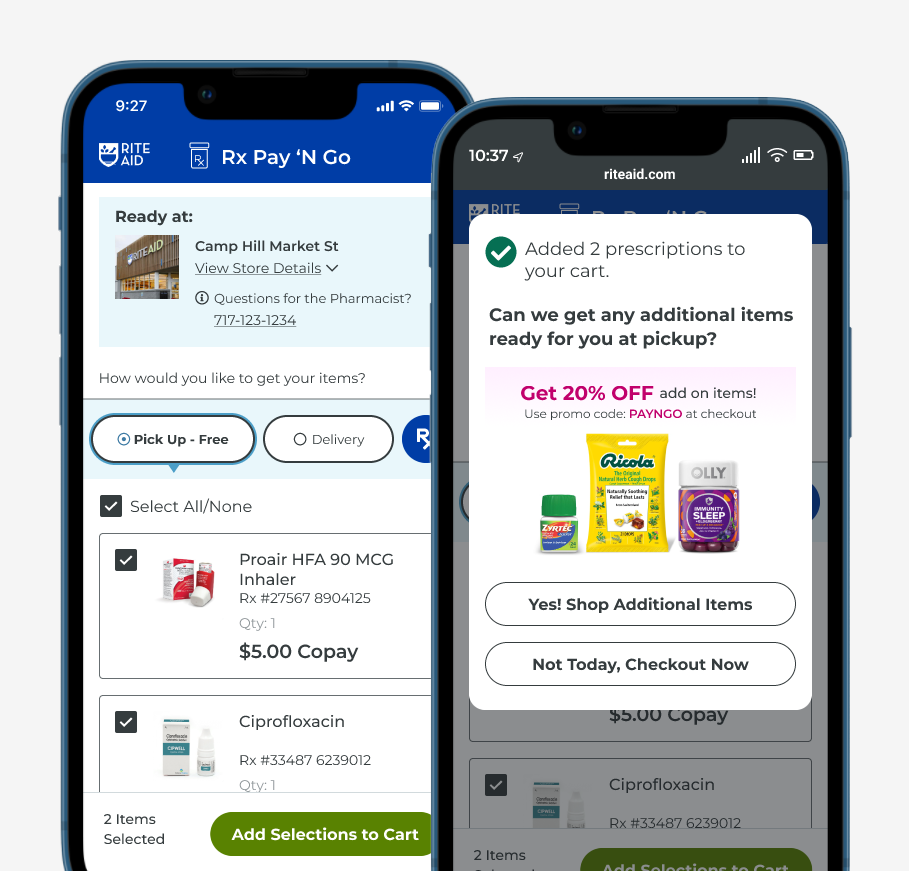
Prescription selection page and interstitial ad
The moment we enabled users to pre-pay for prescription orders on our website using our “Rx Pay ‘N Go” interface, we heard feedback from users that they would like to add other non-prescription items to their order to pick up or deliver along side their prescriptions.
This program was ultimate not successful, and was differed indefinitely.
Rite Aid had never attempted to integrate their back-end systems for prescriptions and ecommerce. Enabling this feature came with many challenges, including:
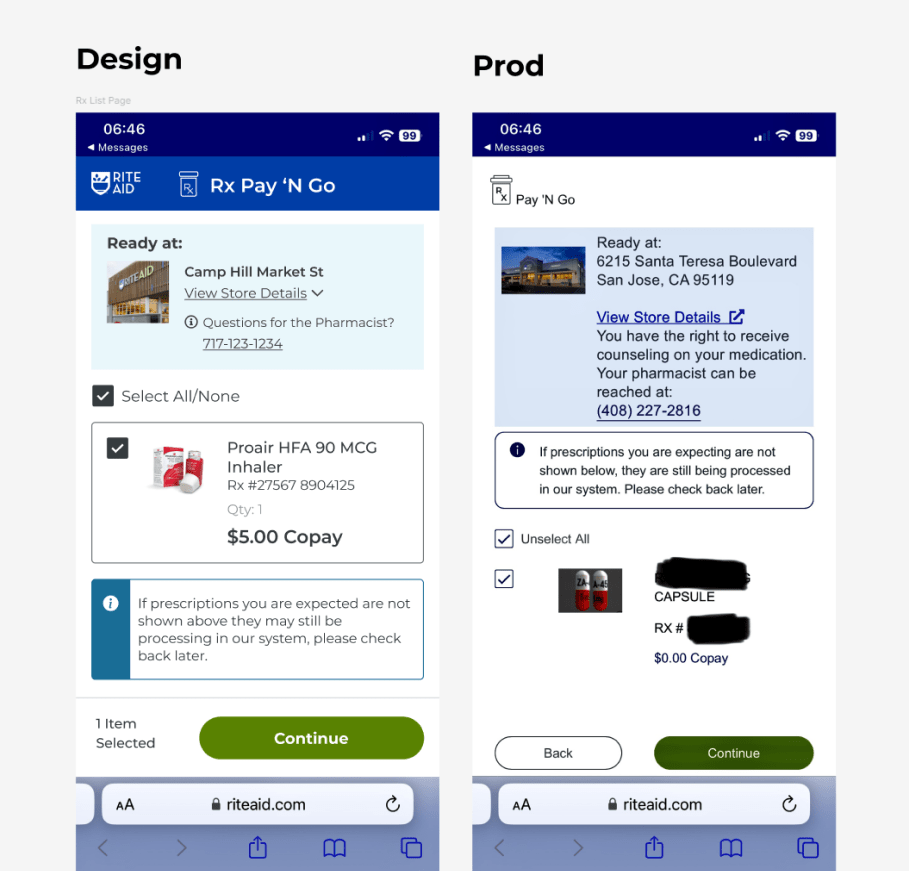
Comparison of UX designs vs. the dev’s execution
I started by performing the following research to inform our direction:
In analyzing our competitors, we found that none of them had added a feature comparable to this at the time. We were in uncharted territory here. It was critical to approach this from a user-centered direction. We created user journeys in many forms to help conceptualize our vision and interviewed users who had expressed interest in this feature.
After iterating on the flow and deciding on a direction, we created prototypes and began user testing. Lots of positive feedback and user success sped us along to our next phase, the pilot.
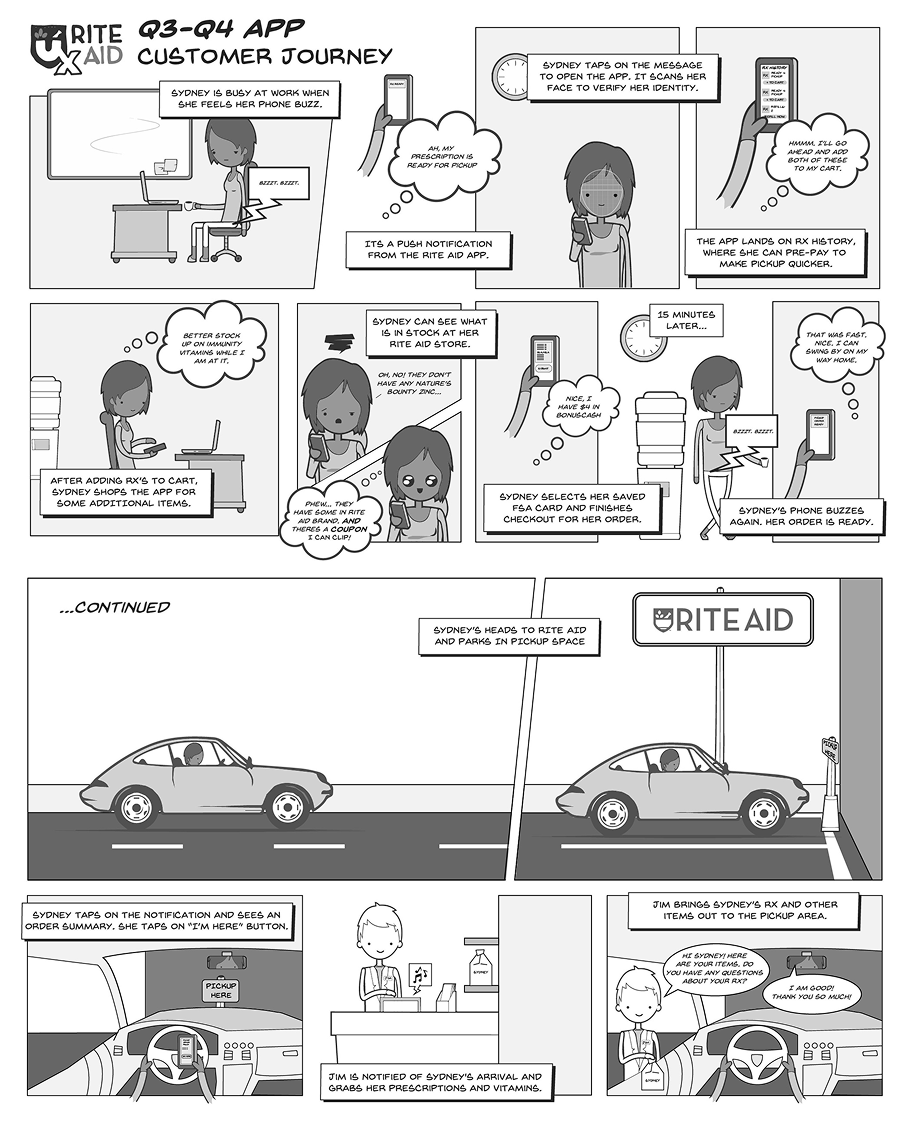
Comic strip version of the journey map
We ran the pilot for over a year. We did not want to expand the pilot without reaching a point where the we were at least meeting the same level of completion percentage that our legacy experience was getting. We iterated on several different aspects of the interface, but ultimately the challenges I outlined above proved too much to overcome given the resources we were working with.
Evidence strongly pointed to load times on the cart page as the culprit leading to increased abandonment. I campaigned vigorously within the business to address this, and we did improve the site performance. During this time we went from 15% completion to 20% completion. (The control was at 27% during this time frame)
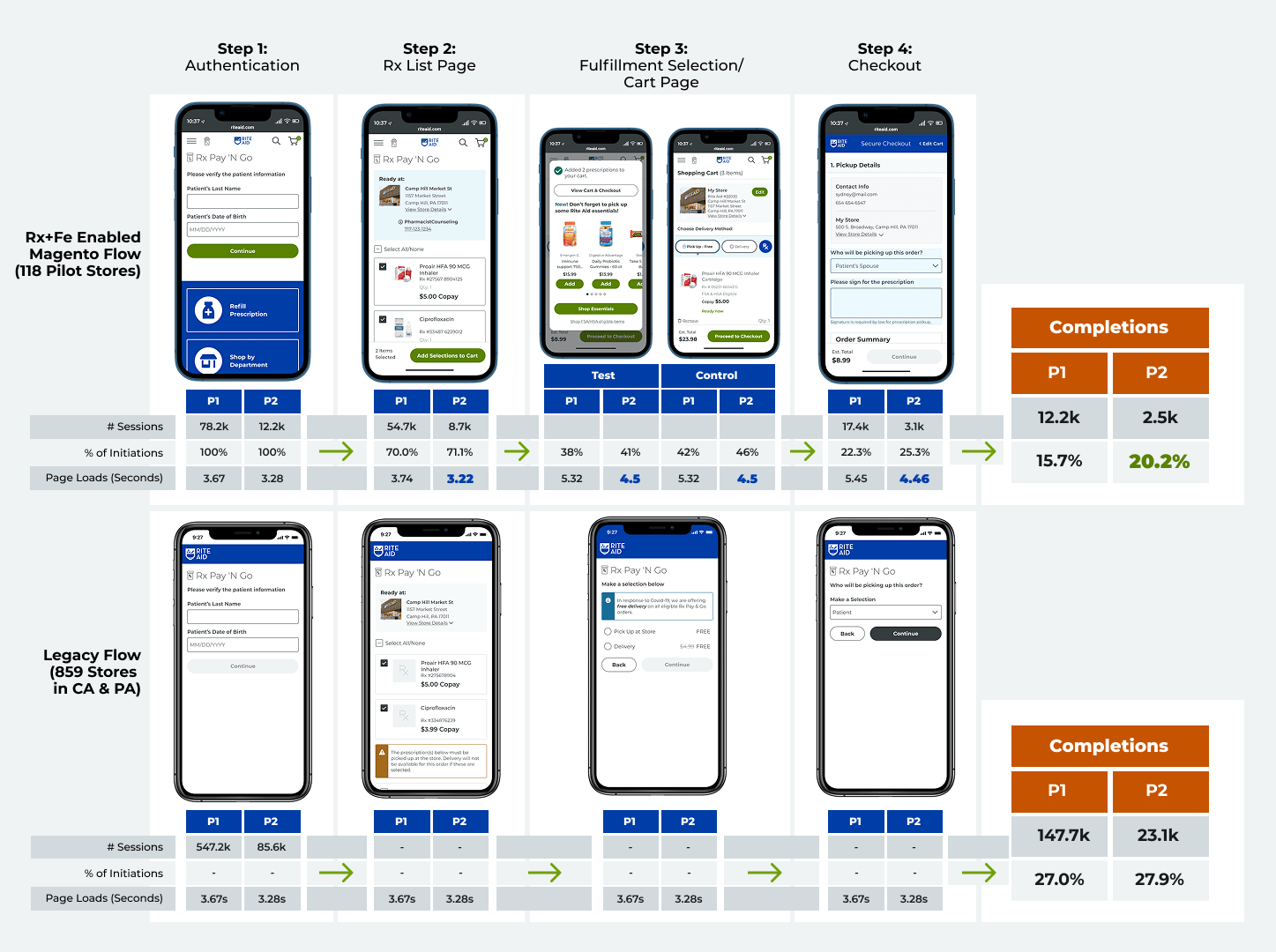
Results of pilot vs. control after increasing site speed (P1 v P2)
The dev team found that tech debt on our Magento implementation was too costly to overcome without a much larger investment, by switching to a headless api approach.
I included this project here despite its ultimate failure because I learned a lot from it. It pushed me as a UX leader and developed my problem solving skills. My takeaways emphasized these principles:
